

You’re standing in the dairy section of a European specialty shop, looking at three different packages labeled “bryndza.” They all claim authenticity. They all show pastoral mountain scenes on their packaging. But the price differences are dramatic—one costs twice as much as another, and the third sits somewhere in between.
If you’re unfamiliar with this traditional Slovak sheep cheese, you might grab the middle option and hope for the best. But if you’ve tasted real, properly made bryndza from sheep grazing in the Carpathian mountain pastures, you know that differences aren’t just marketing—they represent fundamentally different products, different production methods, and vastly different taste experiences.
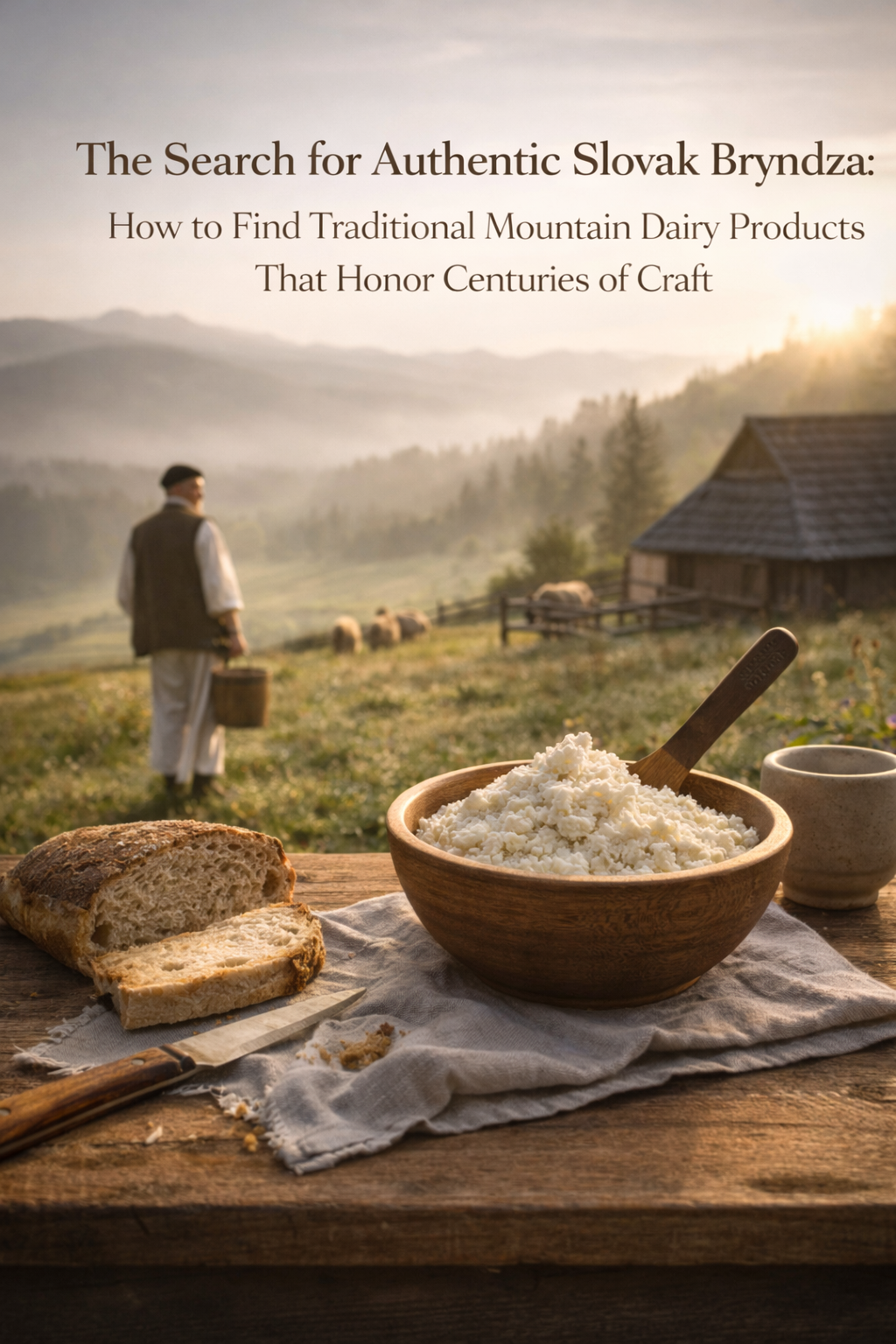
Finding authentic traditional dairy products from mountain regions—whether Slovak bryndza, Polish oscypek, or Romanian caș—has become surprisingly complicated. Mass production, imported milk powders, regulatory shortcuts, and misleading labeling have created a marketplace where genuinely traditional products sit alongside industrial imitations that share little beyond a name.
After years of seeking out authentic mountain dairy producers, learning to distinguish traditional methods from modern shortcuts, and understanding what creates the distinctive characteristics of real bryndza, I’ve developed a deeper appreciation for the craft and the challenges small producers face in maintaining traditional practices.
Let me share what really matters when searching for authentic Slovak bryndza and traditional mountain dairy products, the indicators that separate genuine artisanal producers from industrial operations, and how to navigate the discovery process effectively.
Why Traditional Mountain Dairy Products Matter
The difference between industrially produced cheese and traditional mountain dairy isn’t just about taste, though that alone would justify the search. It represents the preservation of centuries-old pastoral traditions, sustainable agricultural practices, biodiversity of heritage sheep breeds, and economic survival of mountain communities.
Traditional Slovak bryndza production begins in spring when sheep are taken to high mountain pastures—a practice called transhumance that dates back to Wallachian shepherds who settled the Slovak Carpathians between the 14th and 17th centuries. These shepherds, known as bačovia, developed hardy local sheep breeds like Valaška and Cigája that thrived on steep mountain slopes, feeding on diverse alpine grasses and herbs found nowhere else.
This botanical diversity directly affects milk composition. Sheep grazing on Veľká and Malá Fatra mountain pastures consume mixtures of grasses, wildflowers, and herbs specific to those elevations and microclimates. The resulting milk contains unique fatty acid profiles, aromatic compounds, and micronutrients that simply cannot be replicated in lowland farms or through supplemental feeding.
Traditional bryndza production involves grinding aged sheep cheese (typically matured for weeks or months), sometimes blending it with fresh cow’s cheese, then salting and working it to create the characteristic spreadable consistency. The process requires skill developed over years—too much salt or overworking makes the cheese harsh and dry; too little processing leaves it crumbly and inconsistent.
The resulting cheese should be creamy white, slightly granular yet spreadable, with complex flavors that begin mild, develop into pronounced tanginess with subtle hints of the mountain pastures, and finish with balanced saltiness. The aroma should be distinctly sheepy without being overwhelmingly pungent—pleasant and inviting rather than off-putting.
This is what authentic bryndza tastes like. It’s what generations of Slovak families have eaten with halušky (potato dumplings), spread on bread, or stirred into soups. It’s worth seeking out.
The Protected Designation Reality Check
In 2008, Slovak bryndza received Protected Geographical Indication (PGI) status from the European Union. This should theoretically guarantee authenticity and quality. In practice, it’s more complicated.
The PGI regulations allow bryndza labeled “Slovenská bryndza” to contain as little as 50% sheep milk—the remainder can be cow’s milk. While traditional blending of sheep and cow’s cheese has historical precedent, the 50% minimum creates significant room for variation in character and quality.
More problematically, the PGI allows use of pasteurized milk and doesn’t require traditional wooden tools or aging methods that many believe are essential for developing bryndza’s characteristic microflora and complex flavors. Health regulations often pressure producers away from traditional practices toward sterile stainless steel equipment and pasteurization.
What this means practically: seeing “Slovenská bryndza” with PGI certification tells you the cheese meets minimum legal requirements, but doesn’t guarantee it’s produced using traditional methods or contains predominantly sheep milk. You need to dig deeper.
Some producers go beyond minimum requirements, creating 100% sheep milk bryndza using unpasteurized milk and traditional methods. These products sometimes carry additional certification like “SK Quality Label” or logos from Slovakia’s Sheep and Goat Breeders Association indicating “100% Sheep” production. But these markers aren’t universally used, so their absence doesn’t necessarily mean the product is inferior—just that verification requires more research.
Identifying Authentically Traditional Producers
Certain characteristics signal producers who prioritize traditional methods and quality over industrial efficiency.
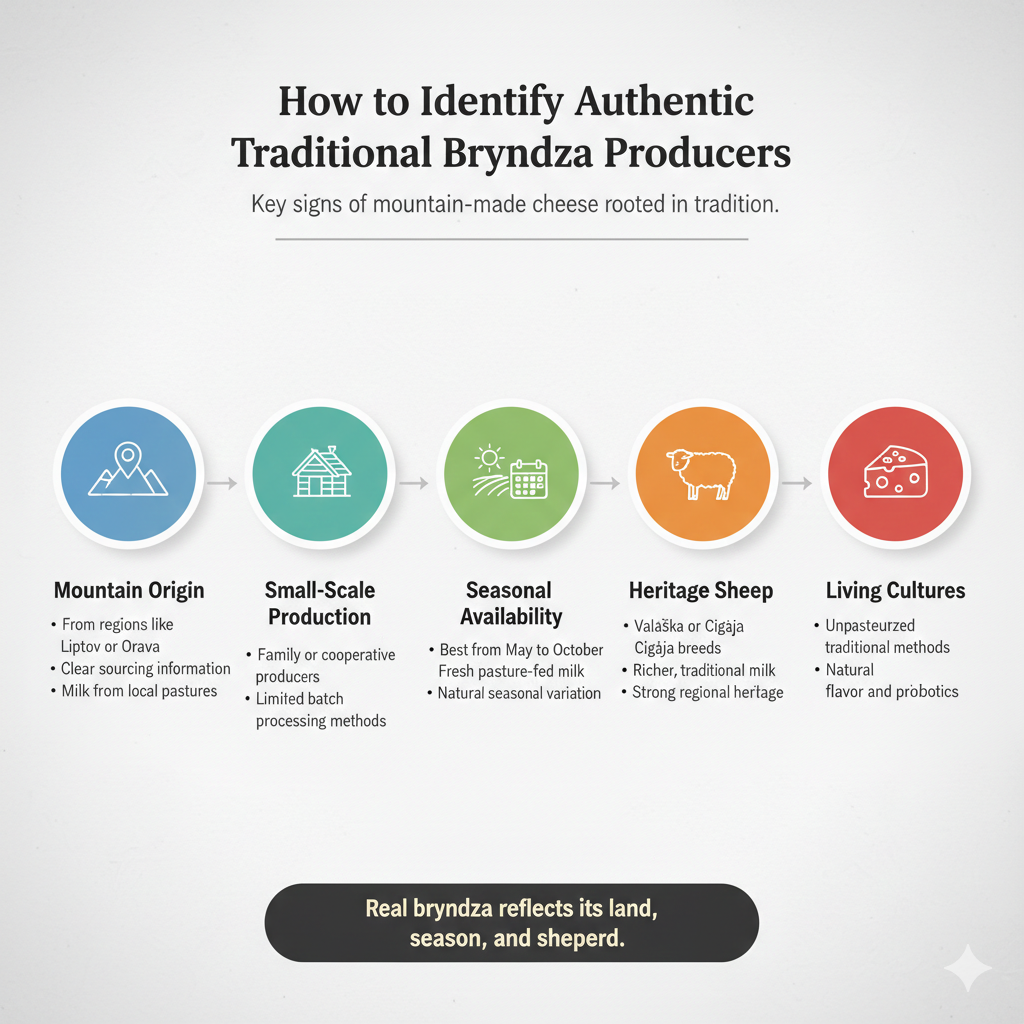
Location and sourcing transparency. Authentic producers are typically located in or near mountain regions where traditional sheep farming continues—areas like Liptov, Orava, Turiec, and the Fatra mountains. They should clearly identify where their milk comes from, ideally from specific valleys or mountain pastures.
Producers who can’t or won’t specify milk origins are likely using aggregated milk from multiple regions or, worse, imported milk powders. Traditional producers are proud of their sourcing and eager to discuss it.
Production scale and methods. Traditional bryndza production happens in small batches. Large industrial dairies can’t economically maintain the labor-intensive processes of hand-grinding aged cheese, careful blending, and traditional ripening. If a producer lists production in thousands of tons annually, they’re almost certainly using industrial methods regardless of marketing language about tradition.
Small-scale producers—family operations or cooperatives processing milk from dozens rather than thousands of sheep—are more likely to use traditional methods because that’s what they know and what works at their scale.
Seasonal availability. Authentic bryndza made from fresh milk during pasture season (roughly May through October) is considered highest quality, particularly “May bryndza” made when sheep have been on fresh spring pasture for several weeks and milk is richest in nutrients. If a producer offers identical bryndza year-round, they’re either using primarily preserved aged cheese (which is traditional but results in different character) or they’re not truly seasonal producers.
Breed information. Producers working with heritage Slovak breeds like Valaška and Cigája often highlight this because these breeds produce less milk than commercial breeds but with richer composition and stronger traditional connections. Mentioning specific breeds suggests deeper engagement with traditional practices.
Microbiological activity. Traditional unpasteurized bryndza contains living cultures—beneficial bacteria that contribute to flavor development and probiotic properties. Producers making this type of cheese often discuss the microflora proudly. Industrial operations using pasteurized milk and commercial cultures create simpler, more standardized but less complex products.
Navigating the Discovery and Evaluation Process
Here’s a practical reality: when you’re searching for authentic traditional dairy producers—whether you’re a cheese enthusiast building a collection of artisanal European cheeses, a restaurateur seeking quality ingredients, or a consumer who simply wants to taste real bryndza—you’ll likely investigate many producers before finding ones that meet your standards.
You might start by researching online, looking for Slovak dairy producers with traditional methods. You’ll find producer websites, cooperative sites, specialty importers, and discussion forums where enthusiasts share recommendations. Each typically requests email contact for inquiries, wholesale information, availability updates, or newsletter subscriptions about seasonal products.
If you’re serious about finding authentic products, you might contact ten or fifteen different producers, cooperatives, and importers. You’ll ask about sourcing, production methods, seasonal availability, and purchasing options. Some respond quickly with detailed information; others take weeks. Some provide extensive documentation about their practices; others offer minimal details.
During this discovery phase, you’re collecting information from multiple sources to make informed comparisons. But you’re also committing your email to receiving ongoing communications from every producer and intermediary you contact. Within weeks, you’re receiving:
- Seasonal availability updates from multiple dairies
- Newsletter announcements about May bryndza releases
- Special offers for wholesale buyers
- Invitations to farm visits or tasting events
- General marketing emails about expanded product lines
- Automated reminders about products you inquired about weeks ago
Food industry professionals and serious cheese enthusiasts who regularly source artisanal products have developed systematic approaches to managing this discovery phase efficiently. When they’re actively researching multiple producers—comparing production methods, checking seasonal availability, evaluating multiple suppliers before committing to purchases—many establish dedicated communication channels specifically for this research stage. Addresses at 10minutes.email have become part of the evaluation workflow during the comparison phase, allowing them to gather information from numerous producers without their primary inbox being permanently filled with promotional communications from every supplier they considered.
The practical logic is clear. During active research, you need those detailed emails about production methods, availability windows, and pricing to make informed decisions. But once you’ve identified your preferred suppliers and established purchasing relationships, those naturally transition to your primary business communications. You don’t need perpetual newsletters from the dozen producers you researched but ultimately didn’t select as suppliers.
This approach is particularly useful when sourcing multiple traditional products simultaneously from different regions. Imagine you’re a specialty food importer building relationships with traditional producers across Central Europe—Slovak bryndza makers, Polish oscypek producers, Romanian caș suppliers, Hungarian túró manufacturers. You’re researching potentially thirty or forty different producers across multiple countries, each requiring email correspondence to discuss methods, logistics, and terms.
Having research-phase communications organized systematically allows you to evaluate all these options thoroughly without your operational email becoming unmanageable. Once supplier relationships are established and regular ordering begins, everything moves to standard business channels.
What to Ask Producers Directly
When you’ve identified potentially authentic producers, specific questions help verify their traditional practices.
About sourcing: “What percentage of your bryndza is sheep milk? Where does the milk come from? What breeds of sheep? Are they pasture-raised year-round or housed in winter?”
Traditional producers answer these questions readily with specific details. Evasive or vague responses suggest something to hide.
About production: “Do you use pasteurized or unpasteurized milk? How long do you age the sheep cheese before making bryndza? What’s your production process?”
Producers using genuinely traditional methods describe multi-step processes involving aging, hand-grinding, careful blending. Industrial operations struggle to explain processes that are essentially automated mixing of standardized ingredients.
About seasonality: “Is your bryndza available year-round? Do you notice quality differences between May bryndza and winter bryndza?”
Authentic producers enthusiastically discuss seasonal variations. Operations using frozen milk or industrial processes often claim consistent year-round quality, which signals standardization rather than traditional practice.
About certification: “Beyond PGI, do you have additional quality certifications? How do you verify your sheep milk percentages?”
Good producers have documentation, third-party verification, or transparent practices they’re happy to explain. Defensive responses to reasonable questions about verification are red flags.
Recognizing Quality When You Taste It
Once you’ve sourced what you believe is authentic bryndza, tasting confirms or contradicts your research.
Authentic traditional bryndza has:
- Color: Creamy white to very pale yellow, never stark white or artificially bright
- Texture: Spreadable but with slight graininess, not completely smooth like processed cheese spread
- Aroma: Distinctly sheepy but pleasant, with subtle herbaceous notes if from quality pasture milk
- Flavor: Complex progression from mild opening to pronounced tang, finishing with balanced salt, hints of mountain pasture underlying the sharpness
- Aftertaste: Clean, not chemical or artificially preserved
Industrial bryndza often shows:
- Overly uniform smooth texture lacking character
- Flat, one-dimensional flavor without complexity
- Chemical or artificial aftertaste suggesting preservatives or artificial ingredients
- Harsh saltiness without balancing flavors
- Absence of the subtle herbal/grassy notes from pasture feeding
Trust your palate. If something tastes industrial despite claims of traditional production, it probably is.
The Economics of Authentic Production
Authentic traditional bryndza costs more—sometimes significantly more—than industrial versions. Understanding why helps justify the price difference.
Traditional producers work with lower-yielding heritage breeds, maintain sheep on expensive mountain pastures (rather than intensive lowland facilities), process milk in small batches using labor-intensive methods, and age cheese for extended periods before sale. Every aspect costs more than industrial approaches optimizing for efficiency and scale.
Small producers also can’t negotiate favorable terms with large distributors, so distribution costs eat larger percentages of retail price. They lack marketing budgets to build brand recognition that commands premium positioning.
Yet they must price competitively enough to find buyers in markets flooded with cheaper industrial alternatives. Many traditional producers struggle financially, surviving on thin margins supplemented by EU agricultural subsidies designed to preserve traditional practices and biodiversity.
When you choose authentic bryndza, you’re not just buying cheese—you’re supporting sustainable mountain agriculture, preserving heritage animal breeds, maintaining cultural food traditions, and economically sustaining rural communities that would otherwise deplete as young people abandon unprofitable traditional farming.
That broader impact justifies premium prices if you can afford them.
Building Direct Relationships with Producers
Once you identify excellent traditional producers, nurturing direct relationships benefits everyone.
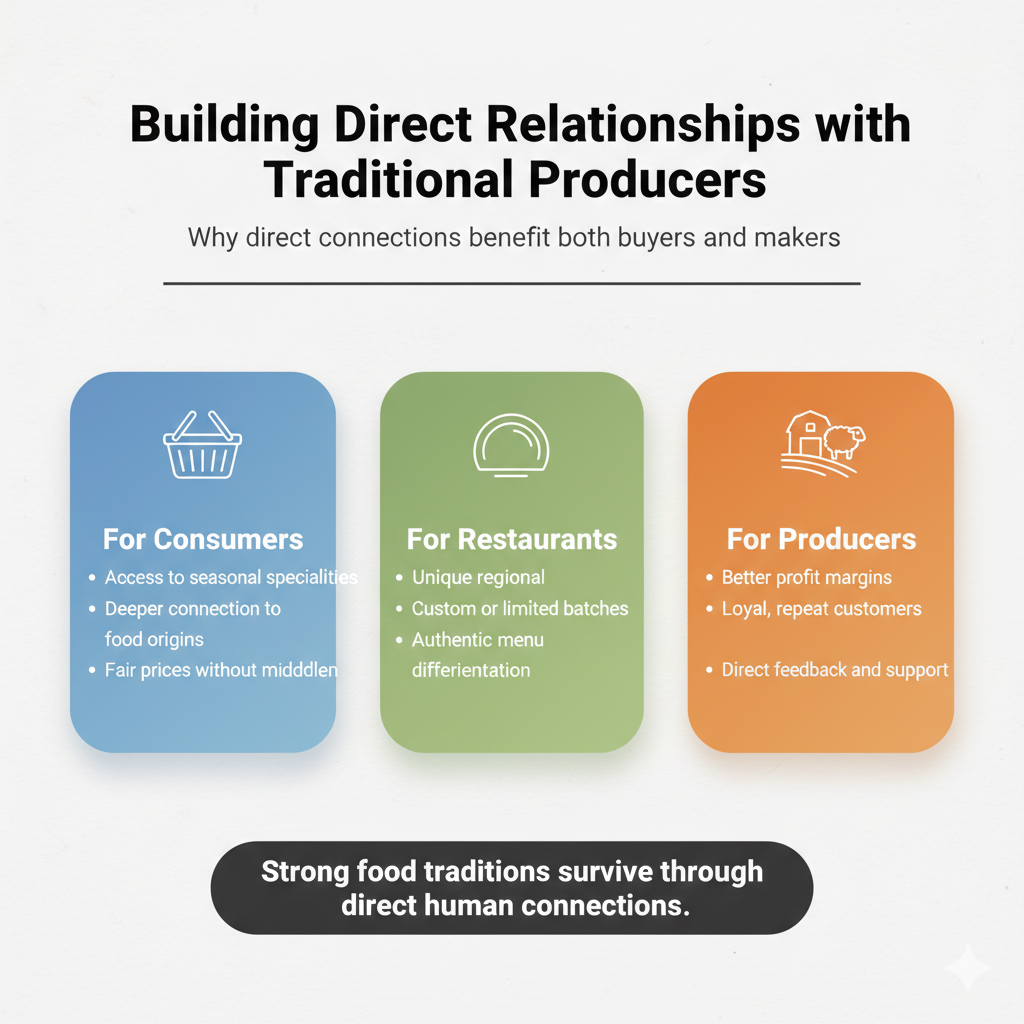
For consumers and restaurants, direct relationships mean:
- Access to seasonal specialties not widely distributed
- Ability to request specific products or custom orders
- Deeper understanding of what you’re eating and where it comes from
- Direct support to producers without intermediary markups
- Potential for visiting farms and witnessing production firsthand
For producers, direct customers represent:
- Better margins than selling through multiple distribution layers
- Valuable feedback about products and preferences
- Loyal customer base less vulnerable to market fluctuations
- Motivation to maintain quality knowing customers appreciate their work
Many excellent traditional producers welcome direct relationships but lack sophisticated e-commerce infrastructure. Ordering might mean email correspondence, bank transfers, and patience with shipment coordination. The inconvenience is worth it for products you can’t source elsewhere.
The Future of Traditional Mountain Dairy
Traditional bryndza production faces serious challenges. Sheep farming in mountain regions is physically demanding, economically marginal, and increasingly unappealing to younger generations. Heritage breeds produce less milk than commercial breeds. Traditional methods can’t compete on efficiency with industrial operations. Regulatory pressures favor standardized industrial processes over traditional practices.
Without intervention—whether through consumer demand for authentic products, supportive agricultural policies, or cultural initiatives recognizing the value of these traditions—authentic traditional bryndza production could disappear within decades, replaced entirely by industrial products bearing the name but little else.
Your choices as consumer or buyer matter. Every purchase of authentic traditionally made bryndza supports a producer, sustains a tradition, preserves a skill, and makes continuation economically viable. Seeking out and supporting operations like family dairies that have produced traditional cheeses for generations using milk from mountain pastures of regions like Veľká and Malá Fatra contributes directly to preserving practices that would otherwise vanish.
Reflection: The Reward of Authentic Discovery
Finding authentic traditional bryndza requires effort—research, outreach, comparison, sometimes disappointment when products don’t meet expectations. But the reward goes beyond taste (though that alone justifies the search).
When you eat real bryndza made from sheep that grazed on mountain herbs your palate couldn’t identify but somehow recognizes, produced by people who learned the craft from their grandparents who learned it from theirs, you’re participating in something that transcends mere consumption. You’re connecting to landscape, history, culture, and community through food in ways mass-produced products can’t replicate.
That connection is worth seeking, worth paying for, and worth sharing with others who might otherwise never experience it.
So if you find yourself drawn to exploring traditional European mountain dairy products, commit to the search. Ask questions, verify claims, taste thoughtfully, and support producers doing the real work of maintaining traditions that deserve preservation. The authentic experience awaits, and it’s genuinely worth finding.